
MMLA's 2026 Convention"After the Archive"November 12–14
350 West Wolf Point Plaza
Chicago, IL 60654 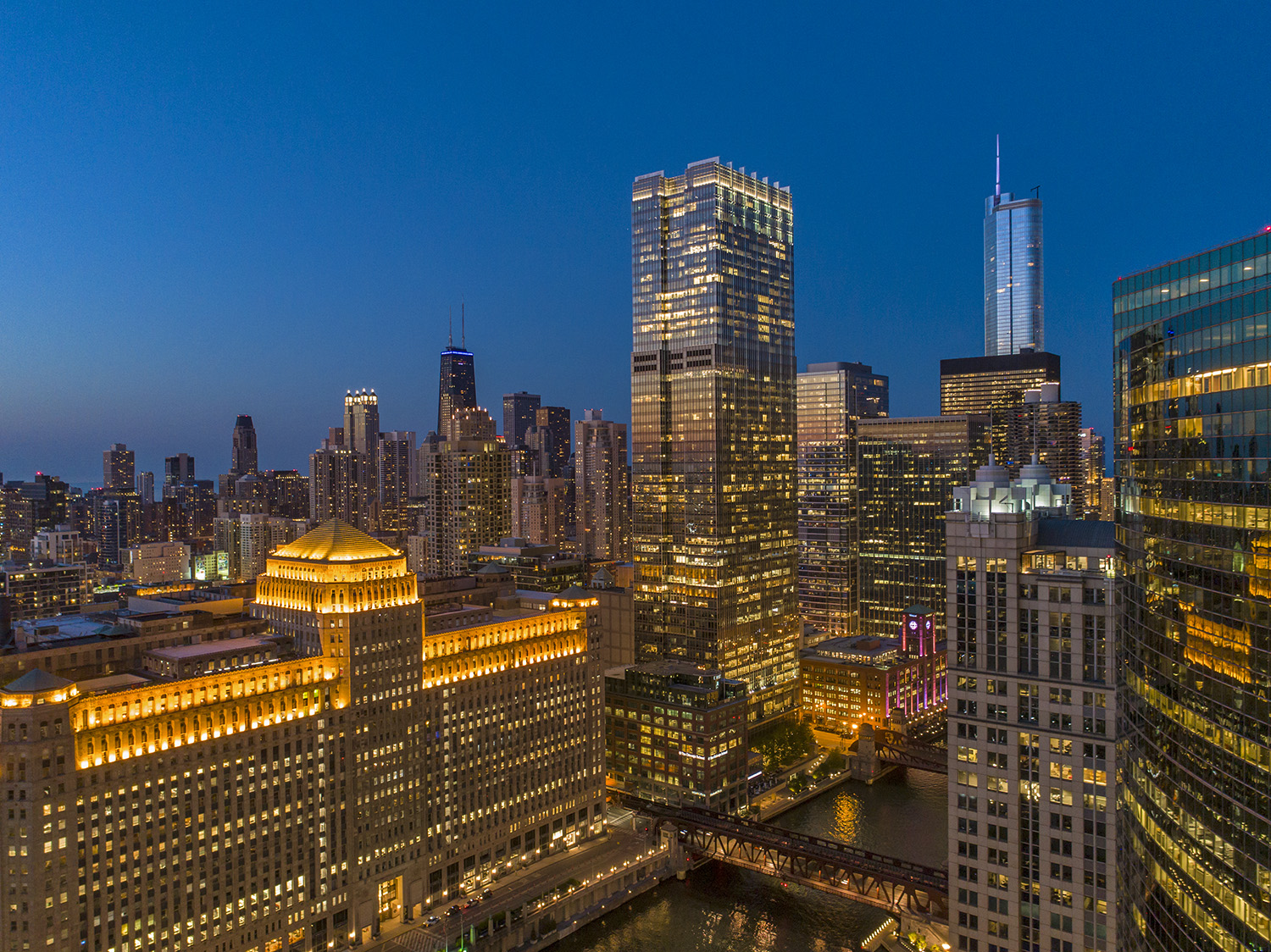
© Anthony Tahlier | Design by Gensler Keynote Address"From the Ruins of the Archive to Counter-Archival Poiesis" Prof. Nevine El Nossery, University of Wisconsin–Madison What remains when the archive itself becomes ruin? We inhabit a historical moment in which war, genocide, settler colonialism, authoritarianism, ecological collapse, and algorithmic governance converge to reshape memory and political life. In this context, the archive can no longer be understood as a stable repository of history but as a contested terrain, vulnerable to erasure, manipulation, and destruction. Libraries, museums, universities, and cultural repositories have become sites of struggle over historical legitimacy and political power, increasingly transformed into ruins. This keynote explores what I call the ruins of the archive: fractured material and epistemic spaces in which official regimes of preservation have been damaged, displaced, or rendered incapable of sustaining historical continuity, yet memory persists through alternative forms of transmission. My interest lies precisely in this movement from rupture to other forms of remembrance. I examine how artistic practices, community initiatives, and pedagogy respond to archival destruction by reworking what remains. To name this process, I propose the concept of counter-archival poiesis: the creative, ethical, and relational practice of making new forms of historical relation from the remains of archival violence. Counter-archival poiesis does not seek to reconstruct an intact archive, recover every muted voice, or transform absence into historical certainty. Instead, it makes archival gaps perceptible and places the past in renewed relation to the present and to possible futures. Focusing on examples from the Global South, I consider contexts in which the destruction of human lives is accompanied by the devastation of educational, cultural, and epistemic infrastructures, exposing the intimate relation between cultural erasure and systems of domination. Within these landscapes of devastation, however, writers, filmmakers, artists, educators, and communities generate counter-archival practices that sustain collective memory, resist epistemic violence, and unsettle dominant regimes of knowledge. Rather than asking simply what remains after the archive, this talk asks how memory survives, migrates, and is reconstituted through its ruins. I argue that counter-archival poiesis gives rise to transformative archival forms whose force lies less in the recovery of a lost totality than in the relations they activate across communities and temporalities, opening possibilities for new forms of knowledge, solidarity, ethical responsibility, and decolonial futurity. Please Note: A/V Not SupportedSince installing and maintaining projectors and screens in the convention venue’s presentation rooms is cost-prohibitive, the MMLA will not be supplying the A/V equipment or technicians needed to support slide projection at its 2026 Convention. Presenters interested in supplementing their spoken remarks with visual aids are encouraged to bring printed handouts to distribute to audience members attending their sessions. Alternatively, presenters may wish to distribute QR codes enabling audience members to view a remote slide presentation on their mobile devices, as described in the YouTube video linked here. Please direct all technical questions about such alternatives to the information technology support staff at your institution. MMLA's Program Committee
|